
The ultimate backhanded compliment: when they love your novel enough to steal it
At the same time Spotify is making books more accessible, AI companies have stolen from novelists, a romance author is getting rich off that stolen material, and the WaPo got rid of its book coverage.

The first time I read a non-physical book was an ebook. The year was 2018, I was in college, reading all the time (sometimes neglecting what I was supposed to be reading for my classes in order to read fiction) and I was finding it hard to find room for my fiction book of the week in my backpack among all my textbooks. This resulted in me sometimes not having a book to read when I had downtime, which annoyed me to no end.
So, after weeks of debating… I caved and bought an ebook of the book I wanted to read. It was amazing! A whole new world opened up before me. My only complaint was that Book of the Month Club didn’t have an ebook option.

I still preferred physical books: the smell, writing in the margins, flipping the pages, being able to go back and forth as I pleased to reread something. But it was nice to have an ebook option for when I (gasp) forgot my book or didn’t have room for it.
Fast-forward a few years, and now it’s 2022. I’m a mom to a six-month-old, holding a full time job, and every time I crack open my book after a long day, I fall asleep.
Reading audiobooks felt even more scandalous to me than reading ebooks did. At first, I did it in secret. Spotify had recently rolled out their new audiobook feature, and after scrolling past it time and time again on my way to yet another murder mystery podcast where you knew little more at the end than you did at the beginning…I caved.
And my life changed forever.
Now, I was able to read a book once every two or three days, immediately transported into a world different than my own, where I could spend my time while driving or typing or cleaning the kitchen.
And then BOTM came out with its audiobook feature (still waiting on the ebook), and between that, Spotify, Audible, and Libby, I was in heaven.
As you probably can guess, when I heard that Spotify is partnering with bookshop.org to sell physical books through its platform, as well as feature called Page Match or Page Sync, where users can scan a page from a ebook or physical book to get to that exact spot in an audiobook, I was thrilled.
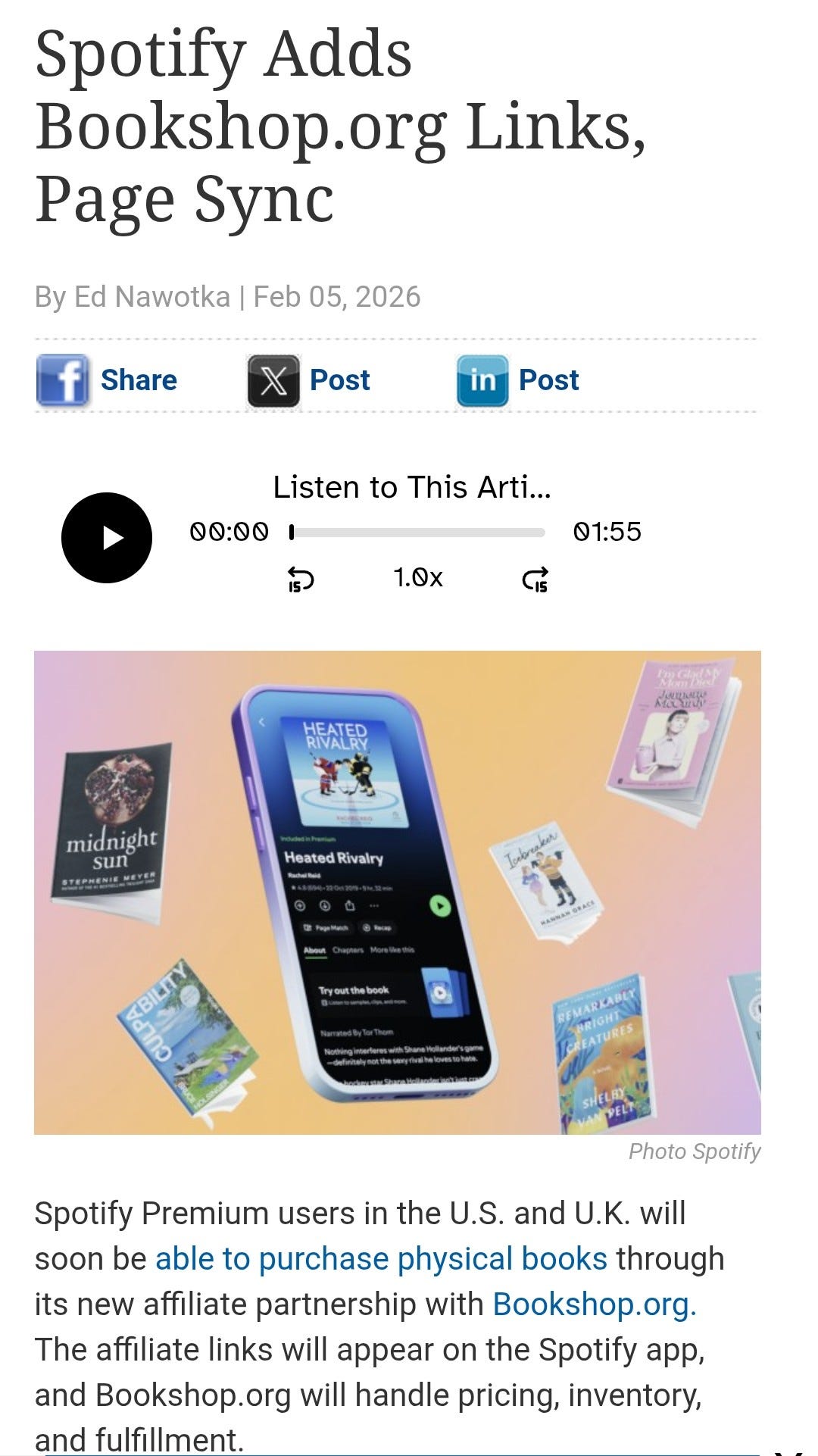
Finally, something for us eternal multitaskers who sometimes start reading a book, and then want to continue it but don’t have the hands available to be physically reading, and have no idea where to pick up from. And it’s worth noting that since Spotify charges for listening hours, so you don’t want to waste your valuable minutes (read: money) stumbling around like a drunk cockatoo through audio cyber space relistening to, and therefore repaying for, content you already heard.
According to Spotify, new listeners are up 36% from a year earlier and listening hours grew 37%.
This new feature comes at a time when physical book sales are flagging but digital book consumption is booming.
Although how people prefer to consume their books is changing, one thing is clear: the appetite for books is strong.
Tech millionaires know your art is valuable but don’t want to pay you for it
Sadly, it seems that Jeff Bezos has been ignorant of this, as the Washington Post made a slew of cuts recently in the name of the almighty dollar, including completely eliminating the Books section.
Book coverage is important because what is art without critique, without feedback? Art isn’t simply meant to be made and then collect dust in silence, it is meant to be discussed, dissected, analyzed, and commiserated over. Book coverage also allows people to make an informed decision if they’re choosing which book to read next. In fact, I do that all the time. I once purchased a WaPo subscription just to read a book review.
Not only that, but book coverage helps authors who have worked for months, sometimes years, on a manuscript introduced to the masses, which in turn can introduce people to the favorite book they didn’t know they had.
The cherry on top of all of this is that a few weeks ago, unsealed court documents in an ongoing legal battle with AI companies like Open AI, Anthropic, Google, and Meta showed that these companies used websites to obtain books through various means, including by pirating, then scan and, in Anthropic’s case, destroy the books to train its AI models, particularly its AI chatbot, Claude. In typical movie villain fashion, Anthrophic named this endeavor “Project Panama.”
“‘Project Panama is our effort to destructively scan all the books in the world,” an internal planning document unsealed in legal filings last week said. “We don’t want it to be known that we are working on this’,” a Washington Post article written about the mayhem said.
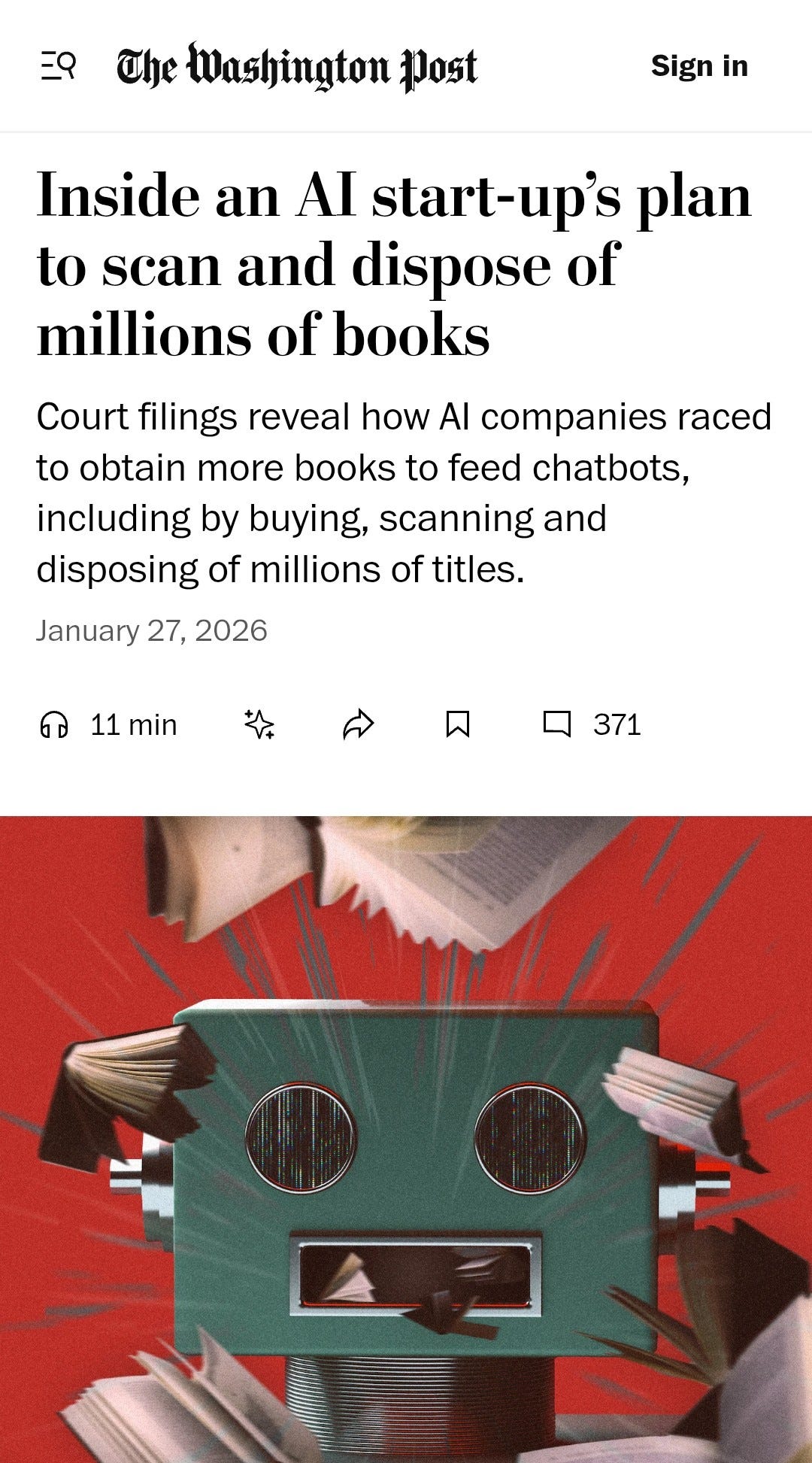
According to an article by the Washington Post (which has a content partnership with OpenAI), “‘Books were viewed by the companies as a crucial prize, the court records show. In a January 2023 document, one Anthropic co-founder theorized that training AI models on books could teach them “how to write well” instead of mimicking “low quality internet speak.” A 2024 email inside Meta described accessing a digital trove of books as “essential” to being competitive with its AI rivals.”
The article says that while a couple of employees brought up potential legal concerns, they were ultimately dismissed by higher-ups.
It’s worth noting that Jeff Bezos is an investor in Perplexity, which uses Claude AI models. So, while he is helping line the pockets of millionaire tech bros to steal the hard work of wordsmiths everywhere, he’s laying off journalists that help get the word out about those works of art, despite the fact that they are apparently so valuable to his buddies.
